The sideline
Saturday morning. My oldest’s rugby tournament. I’m standing on the sideline, coffee in hand, like every other parent.
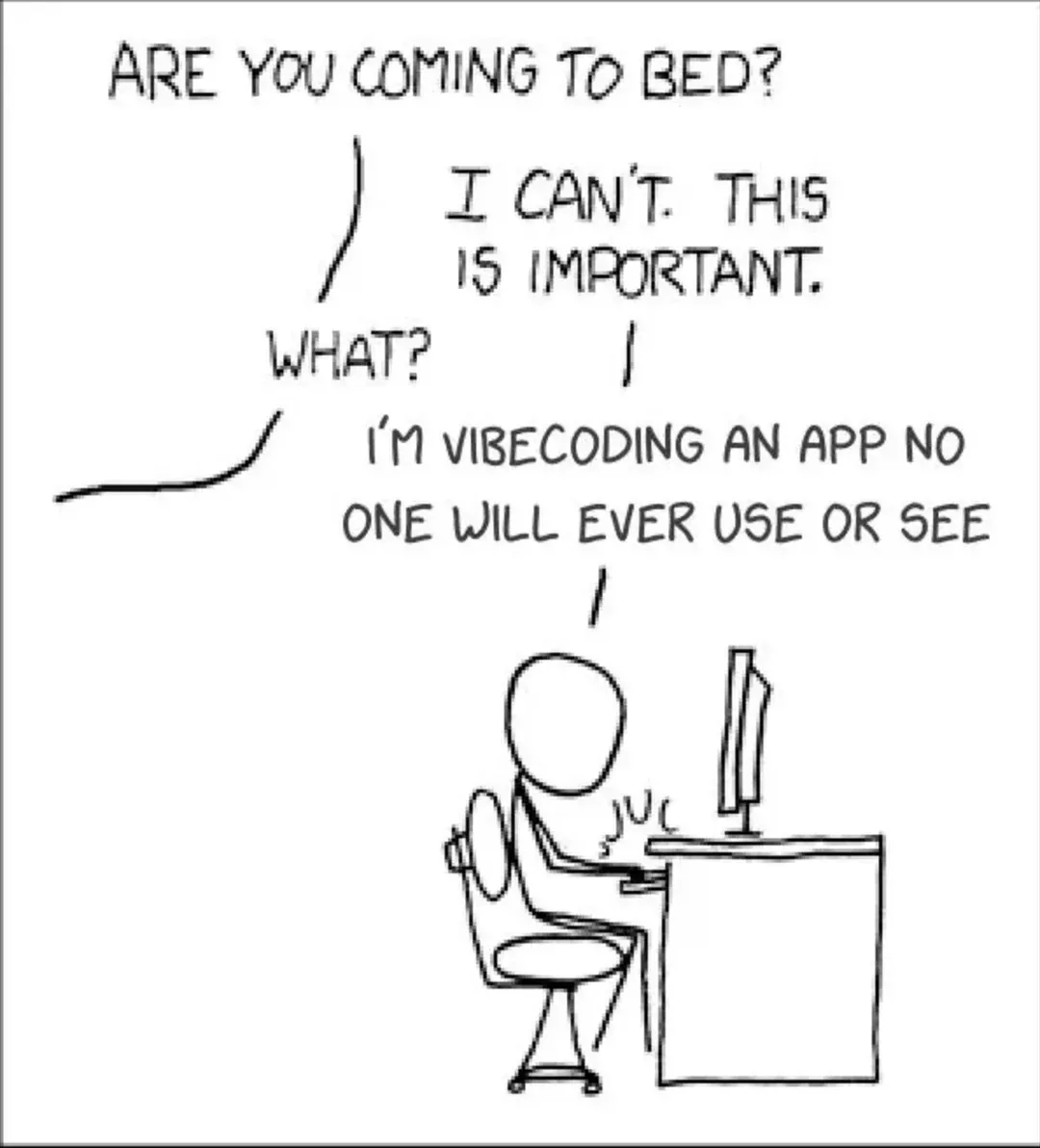
Except between plays, I pull out my phone. Not to scroll. To open Claude Code.
I’ve been working on RunSloth, my side project, for a few weeks now. And this morning, I had an idea for a feature. Nothing urgent, nothing important. But I need to try it. Right now.
One thing leads to another. We make a plan. Then a PR. Then a review. I tell myself I’ll look at it later. But “later” lasts about thirty seconds. I kick off the dev, iterate, review again.
My son might be scoring a try right at that moment. I don’t know. I’m on my phone, steering an AI that’s coding for me.
And the worst part is that it feels completely normal.
The 200,000-token intern
The other day, a bug. Nothing major. The kind of thing you can feel coming when you’ve got a few years under your belt.
I let the AI look into it. Spin. Try things. Backtrack. Try again. I watched the tokens tick away.
After a while, I opened my IDE. Five minutes later, it was fixed.
It’s a bit like helping out an intern who’s stumbling over something, just because they’re not looking in the right place. The problem isn’t complicated. But without the instinct, without that reflex of knowing where to look, you can go in circles for hours.
AI doesn’t have that instinct. It has monstrous computing power, an encyclopedic memory, an unlimited capacity for work. But that feel for code, that intuition of a developer who’s seen this bug a hundred times in different shapes — that, no.
It never says no
What strikes me most about AI is that it never doubts.
You ask it for something shaky, it does it. You give it a vague prompt, it produces something confident. You hand it a terrible architecture, it implements it enthusiastically. You ask it to disagree with you, it does — even when you’re right.
It never tells you: “Wait, are you sure? That’s not a great idea.”
It says yes. Always yes. And it piles on. Code, decisions, technical debt. Layer after layer, with a smile.
For someone experienced, it’s manageable. You can tell when things go off the rails. You know how to steer it back on course. You have that filter.
For someone junior, it’s a trap.
As a manager, I see it every day. Everyone’s getting into it, at their own pace, like with any new tool. Gone is the learning curve where you trip over your own feet. The one where you spend hours reading docs, sweating because you can’t find a solution. You have something that does it all for you. But here’s where it gets insidious: AI makes you believe you’re right. That your code is solid (well, the code it wrote). That you’re heading in the right direction. It validates you constantly.
Without the perspective to challenge what it suggests, you can end up with a massive PR that goes in every direction, or get dragged through pointless debugging. Hours wasted on something a more seasoned eye would have solved in minutes.
The most powerful tool in the world, piloted blind.
Four trash cans
Let me be clear: I’m not talking from an ivory tower.
RunSloth? It’s version 4. At least.
The first three, I threw away. In the trash. Entirely.
Every time, the same pattern. I start with AI, full of enthusiasm. The first features come out fast, it works, it’s exhilarating. Then I iterate. Add. Modify. And after a few weeks, the code has become an unmaintainable plate of spaghetti. For me and for the AI.
Prompts too vague. Not enough guardrails. No established process for planning, reviewing… basically, no rules of engagement. The AI had done exactly what I asked. The problem was that I didn’t yet know how to ask properly.
Same thing at work. Migration scripts, small internal tools. Testing different approaches, different LLMs, different levels of precision… you quickly see that if you go in blind, things spiral.
AI amplifies what you are. If you’re rigorous, it helps you go faster. If you’re fuzzy, it produces fuzz. Faster.
The vertigo
The other day, I came across a talk by Nicholas Carlini. Cybersecurity researcher, now at Anthropic. Not exactly a lightweight.
He explains how Claude autonomously found a security vulnerability in the Linux kernel. A flaw from 2003. Over twenty years of thousands of researchers missing it.
Twenty years.
And just like that, the pressure ratchets up another notch.
Because it’s exciting. Of course it’s exciting. The potential is staggering.
But it’s also dizzying. AI is no longer just assisting you. It’s starting to see things you don’t see. To find things nobody finds.
And everything moves so fast. The tools, the agents, the models. It changes every month. It’s everywhere — at work, in your feed, in the news. Some people are starting to burn out on it. Overdose. And honestly, I get it.
Who wouldn’t be a little tired or worried?
Guilty
And me, in the middle of all this — what am I doing?
I’m making PRs from my phone on the sideline of a rugby pitch. I’m building a running coach. I’m testing, iterating, and let’s not kid ourselves, I’m having a blast.
I love it. Genuinely. Having a tiny idea and being able to pull the thread in a few hours. Watching something take shape when before, it would have stayed in the back of my mind for months. It’s a pleasure I don’t deny myself.
But at the same time.
Do we really need this? This extra layer of comfort, of convenience? Us, wealthy countries, developed nations, while a large part of the world is fighting disease, malnutrition, war.
Is it worth it to deliver ever faster, ever harder?
The environmental impact. The societal impact. The speed at which all of this is hitting us, without anyone really having time to prepare.
We might be at the start of a revolution on par with the printing press or industrialization. There’s something thrilling about that. But the speed at which it’s hitting us — that’s nothing like before.
I build. And I feel a little guilty.
No answer
Is this the greatest revolution in human history, or a damp squib? In five or ten years, the answer will seem obvious. Today, nobody knows.
Me, I don’t have an answer. Just this strange feeling of sitting between excitement and unease, phone in hand, getting ready for my next PR 📱